

How Game Servers Scale to Thousands of Players
How online worlds grow beyond one server: sessions and instances, matchmaking, regions, autoscaling in the cloud and splitting a world into cells.
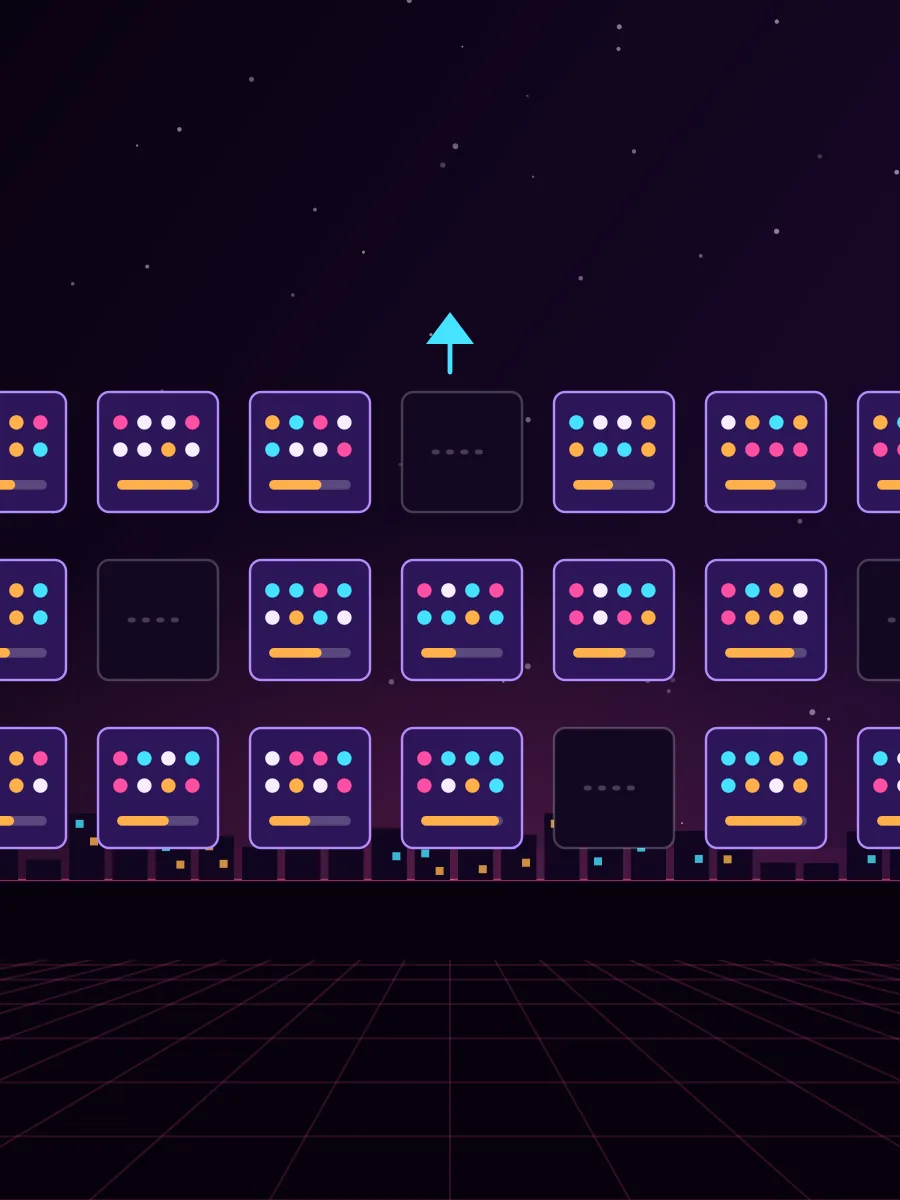
One server process can only run a limited number of players, because every player costs processing time and bandwidth. An online game that serves thousands of players therefore uses many servers and a system that decides which player goes where. The two main ideas are instances (many small copies of the world) and cells (one big world divided between servers).
Sessions and instances
Most online open-world games run the world in sessions. Each session is one copy of the world that holds a fixed number of players, for example 16 or 32. When the session is full, a new one is started. Players in different sessions do not see each other. It is simple, predictable and easy to scale: more players means more sessions.
Matchmaking and lobbies
A matchmaking service puts players into sessions. It looks at the region (to keep the delay low), the game mode, the friends a player wants to join, the version of the game and how full each session is. It also decides when to start a new server for a waiting group.
Starting and stopping servers automatically
- Servers run in the cloud, in containers, so that a new one starts in seconds
- A fleet manager keeps a few empty servers ready and adds more when many players arrive
- Servers that are empty are stopped, so you only pay for what is used
- Open-source tools such as Agones run game servers on Kubernetes and handle this process
Regions
Distance causes delay. A player in India connecting to a server in Europe has far more lag than one connecting to a server in India. Games therefore run servers in several regions and send players to the nearest one. Players in different regions may still be able to play together, with a higher delay.
One huge world: cells
Some games want everyone in the same world. The map is then divided into cells and each cell is handled by a different server process. When a player crosses the border, the player is handed over from one server to the next. Crowded places, such as a city centre, need special care, because too many players in one cell would overload its server.
Keeping it healthy
- Monitor the number of players, the server speed, the delay and the errors in real time
- Test with thousands of simulated players before launch (load testing)
- Plan what happens when a server crashes: players are moved to another server and their progress is safe
- Keep the game state that must not be lost in a database, not in the server memory
Scaling starts with a good client-server design and depends on a safe place to store progress (accounts and databases). Read the overview in how online open-world games are made, and if you want a team to plan it, see our game development services.
Frequently asked questions
How many players can one game server handle?
It depends on the game. A fast action game with complex physics might handle 16 to 64 players per server process, while a simpler game can handle more. Developers measure it with load tests and plan the number of servers from the result.
What is the difference between instancing and sharding?
Both split players across several copies of the world. Instancing usually creates temporary copies for a group or session, while sharding means several long-running copies of the same world, each with its own set of players.
Why do online games use the cloud?
The cloud lets developers start servers when many players arrive and stop them when players leave, in the region where players are, so they only pay for what they use.